
Insights for Engaging the Trump Administration on Global Anti-Corruption Efforts
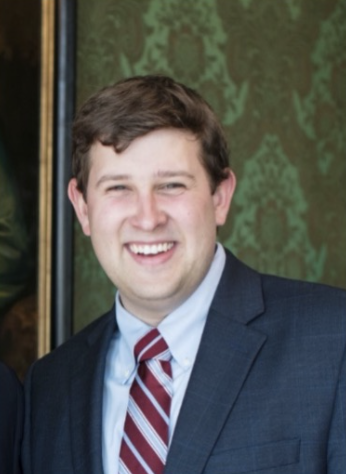
By Schuyler Miller

What does the current Trump Administration really think about corruption around the world?
In contrast to previous U.S. administrations, Trump officials have not generally articulated a clear view of corruption or plans to prevent and combat it, both domestically and globally. The Administration’s policy process is idiosyncratic and fluid by design––most evident in the President’s social media habits. More seriously, anti-corruption practitioners at home and abroad have criticized Trump and other officials for intentionally diminishing anti-corruption efforts or being corrupt themselves, with charges ranging from conflicts of interest to bribery. This is why many practitioners within and outside of government continue to wonder: is there any way to effectively engage U.S. officials on countering corruption globally? Or is it a lost cause?
As the second Trump Administration nears the end of a first year marked by major shake-ups, these questions are difficult to answer. Still, there is value in probing how the international anti-corruption community might engage the Administration on foreign anti-corruption efforts.
"Many practitioners within and outside of government continue to wonder: is there any way to effectively engage U.S. officials on countering corruption globally? Or is it a lost cause?"
Drawing on insights from years of experience as a U.S. government civil servant and from my understanding of the Administration’s posture on countering corruption to date, I outline the current state of play and identify three principles that may be useful for practitioners who wish to understand the Administration or work with it.
The Trump Administration and global anti-corruption: breadcrumbs or bad intentions

Thus far, the Trump Administration has given practitioners minimal information about, and limited opportunities for engagement on, its approach to countering corruption globally. In a March 2025 statement on visa restrictions related to corruption in Argentina, Secretary of State Rubio noted that the designations ‘reaffirm our commitment to counter global corruption, including at the highest levels of government.’ The State Department’s Bureau of International Narcotics and Law Enforcement Affairs has a dated anti-corruption webpage, and the Bureau of Economic and Business Affairs only briefly alludes to anti-bribery work. The Department of Justice has a webpage on legislation and enforcement against foreign bribery.
Broadly, however, Administration officials have rarely commented on corruption globally and the Administration has communicated few anti-corruption policies or plans. This patchy landscape contrasts with how previous Republican and Democratic administrations articulated more concerted efforts to address corruption internationally. Examples include the Bush Administration's international anti-kleptocracy strategy (2006), the first Trump Administration’s executive order on sanctioning corrupt actors (2017), and the Biden Administration’s countering corruption strategy (2021).
In trying to understand this strong contrast, practitioners at best remain troubled about the Administration’s lack of commitment to prioritize corruption issues and maintain policies and strategies to address them. At worst, some advocates contend that the Administration tolerates corruption or even perpetuates it. They point to the erosion of anti-corruption guardrails, cuts to global anti-corruption efforts like foreign assistance, and alleged corruption within the Administration itself. Facing this challenge, many organizations and individuals are focusing on holding the Administration to account, advocating for reforms, and seeking new political leadership.
The three principles for engaging the Trump Administration on global anti-corruption efforts
Still, several Administration officials, including dutiful civil servants, continue to attempt to counter corruption. Some long-standing work is ongoing, such as multilateral diplomacy, scaled-down foreign assistance, and some sanctions and visa restrictions. For example, the U.S. Embassy in Argentina solicited proposals for projects on issues like corruption, the U.S. Embassy in Nigeria recently posted about travel bans for corrupt officials, and the Department recently designated Haitian officials for involvement in corruption.
So, there may be opportunities to engage parts of the current U.S. government to prevent and counter corruption globally. But given the lack of a coherent anti-corruption policy and the idiosyncratic nature of Trump’s governance, approaches will likely be most effective if they are personalistic, relationship driven, and aligned with Trump and Administration interests.
Subscribe here to receive the Corruption in Fragile State Blog's posts. We publish every three weeks — enough to keep you informed without cluttering your inbox.
Practitioners seeking to understand or engage with Administration political officials and civil servants should consider filtering plans through three principles:
1. Link to U.S. interests
The Administration has contended that any work globally should have strong and immediate ties to U.S. interests – as the Administration defines them. In Secretary Rubio’s words, ‘does it make us [America] stronger, safer, or more prosperous?’ This perspective is more traditionally ‘realist,’ in that it prioritizes direct national interests. It generally treats global dynamics as more zero-sum and supposes that it is foolish to help others or be the moral police without U.S. benefit. Viewed generously, this approach warrants prioritizing core Administration interests like economic competition, geopolitical security, or transnational threats. For example, the Trump Department of Justice’s Foreign Corrupt Practices Act enforcement guidelines call for limiting undue burdens on U.S. firms and prioritizing bribery involving drug cartels and transnational criminal organizations. The DOJ has at least one indictment under this narrowed scope. Ultimately, this strategy elevates other U.S. policy interests over fighting corruption. It may even permit tolerating (or even participating in) corruption to achieve other interests. This has been an issue for U.S. policymakers domestically and internationally, across administrations – although few are willing to admit it and the extent varies.
2. Streamline anti-corruption considerations
The Administration has made significant cuts to standalone anti-corruption efforts. In foreign affairs, examples include elimination of the State Department’s Office of the Coordinator on Global Anti-Corruption, the DOJ’s Anti-Kleptocracy initiatives, or select State and USAID anti-corruption programs. Domestically, the Administration has hollowed out a DOJ public integrity unit and is withholding funding for support to inspectors general. While critics view these actions as nefarious, some Trump Administration officials or allies seemingly believe these cuts are a legitimate effort to reduce duplication and wasteful spending. This fits within the State Department’s concentration of power within regional and bilateral diplomatic relations. Viewed charitably, this approach generally asserts anti-corruption is better embedded within bilateral programs and initiatives, not as a separate effort. The notion is not entirely new. In fact, the U.S. Agency for International Development has previously focused on integrating anti-corruption work across sectors. Yet it also saw value in complementary centralized and global initiatives.
3. Consider scoping and specificity
Some Trump Administration officials and supporters seem to have limited patience for any discussions of the issue that are not properly scoped and do not use clear terms. As such, they often reject broad accusations that do not identify specific corrupt acts, as defined in law. For example, Republicans (with varying motives) often dismiss concerns about the Administration’s corruption by decrying what they see as an absence of legal violations. Examples include the Trump business and family benefiting from their $TRUMP meme coin, officials having previous business ties to foreign governments, or Trump accepting a Qatari jet on behalf of the U.S. government (although some critics disagree and may pursue legal action). This view also generally operates on a narrower understanding of the ‘private gain’ component of corruption charges, focusing more on personal profit rather than political benefit. The Administration may bring this approach to accusations of corruption abroad, too. For example, officials may be skeptical of or downplay ‘state capture’ claims against strongmen like Orban in Hungary or Bukele in El Salvador. In the end, some officials may spurn concerns with individual abuse of power unless critics can detail clear evidence of the unlawfulness and the urgency of addressing it. Otherwise, they might contend, concerns should be focused on systemic legal or policy reform, not individual accountability.
Transparency or tea leaves

Anti-corruption advocates should consider these principles as they shape their engagement
with the Trump Administration. They should also urge Administration officials to outline clear and consistent global anti-corruption policies and strategies, all while preserving discretion. Developing and announcing an approach takes time, but it could clarify if and how the Administration is executing an anti-corruption policy—the objective of the Biden Administration’s anti-corruption strategy and implementation fact sheets. At a minimum, the State Department could restore the anti-corruption policy area webpage that previous administrations maintained.
In the absence of clarity and action, practitioners will continue to read tea leaves and chase whispers in the corridors of Washington. Or worse, they will have more reason to believe the Administration is not ‘anti’ corruption at all.

Schuyler Miller was a Foreign Affairs Officer for the U.S. State Department, where he co-led implementation of the Combating Global Corruption Act before separating from the Department in September 2025. He previously served as Policy Advisor for the State Department's Coordinator on Global Anti-Corruption, where he led strategy implementation, programmatic coordination, learning, and Europe engagement. As a Presidential Management Fellow (PMF), he also supported anti-corruption and criminal justice program design, implementation, and learning for the Office of Knowledge Management in the State Department’s Bureau of International Narcotics and Law Enforcement Affairs (INL). During his PMF rotations, Schuyler advanced multilateral anti-corruption policy in INL’s Office of Global Programs and Policy and strengthened the use of evidence and learning in foreign assistance through rotations with the U.S. Agency for International Development's Anti-Corruption Task Force and Democracy, Human Rights, and Governance Center. Before serving as a PMF, Schuyler worked as an Anti-Corruption Advisor in INL and for the National Endowment for Democracy’s World Movement for Democracy. He received his MSc in International Politics as a Mitchell Scholar at Trinity College Dublin and a BA in Government and Foreign Affairs with honors from the University of Virginia. You can follow his LinkedIn here and blog here.


