
A rough terrain for women: the gender dynamics in public procurement
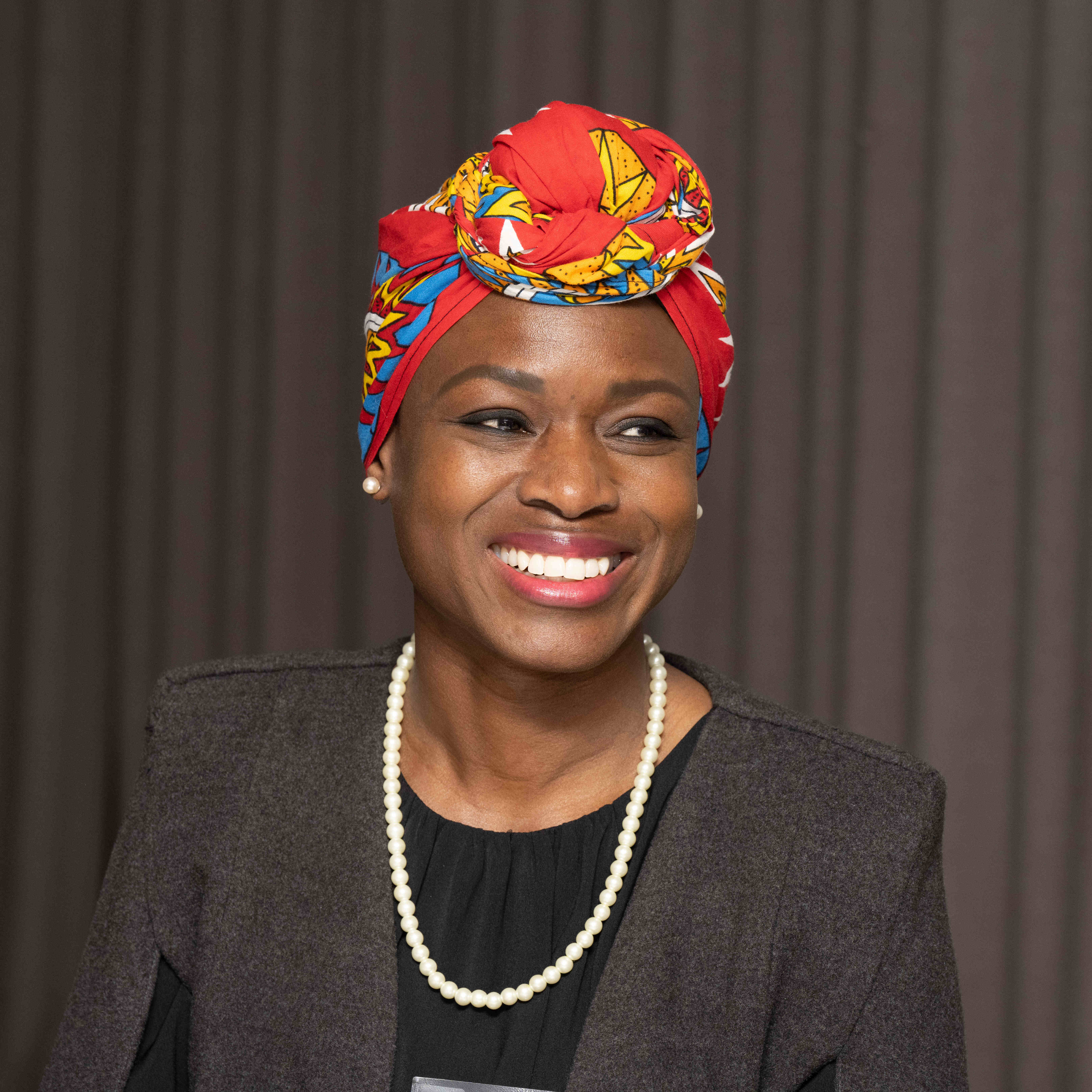
Whether you call it conscious bias or unconscious bias [….] procurement is still male dominated. The leaders are still men, decision-makers are men and procurement officials will find every reason to give a contract to a man, even though there's no objective reason.
A conversation between Sope Williams (Professor and Deputy Director, African Procurement Law Unit at Stellenbosch University, South Africa; Distinguished Visiting Professor, George Washington University, USA) and Cheyanne Scharbatke-Church (Executive Director, Besa Global)

In 1869, in an essay far ahead of its time, English philosopher John Stuart Mill declared that ‘the legal subordination of one sex to the other – is wrong itself, and now one of the chief hindrances to human improvement; and that it ought to be replaced by a principle of perfect equality, admitting no power or privilege on the one side, nor disability on the other.’ One hundred and fifty seven years later, there are still many legal and illegal ways in which gendered inequality, power and privilege harm women. One of these is in the realm of public procurement.
An expert in gendered corruption and gender-responsive procurement, Professor Sope Williams saw a convergence between the two that she could not ignore. In this abridged conversation held with the Executive Director of Besa Global, Cheyanne Scharbatke-Church, she talks about how she found herself on this path that led to a new direction for research, as well as offering lessons to anti-corruption practitioners and public procurement professionals.
What brought you to your current research on women, corruption, and public procurement?

A few years ago, when I was looking at gender-responsive procurement in South Africa, corruption kept showing up as a barrier to women-owned companies being able to access contracts. This was an eye-opener: my background is in corruption and public procurement, but I never thought of it as something that had a particular gender dimension. In my interviews, all the women mentioned that the two main forms of corruption that they were affected by were financial bribery and sexual bribery. That shocked me to my core–as these were well-educated businesswomen. This became the impetus for an IDRC project where I was commissioned to expand the research to cover six East African countries, essentially asking the same question: What's keeping women from being able to navigate procurement?
The findings were the same. For example, in Kenya, one respondent said, ‘if I do get a government contract, I don't tell anyone, because the assumption is that I've slept with someone.’ And the women I interviewed in Uganda said it's just routine that if you bid for a government contract, you'll get a call from a person in the public agency saying, ‘OK, we've got your tender, but you must come in for your “carpet interview’’.’
In some of your writing you talk about bribery and sexual transaction in terms of public procurement. But you also talk about fraud and bias. These are widespread forms of corruption, but how do they play out in a gendered way?
This is practiced widely in both developed and developing countries, often, for example, when minority groups get preferential treatment in bid evaluations. So, if certain contracts are set aside for women, men will put up a woman (a spouse, partner, or friend) and use them as a front. In fact, research shows that as many as 40% of the of the companies that are earmarked for women owned businesses do not formally qualify as a woman owned business. And that's in the US!
"Our legal systems are not going to do anything for women unless we address the underlying norms. If the patriarchy is strong and intractable, like it is in Africa, so are the norms that support it."
Then there’s the huge problem of bias. when I was doing the research on South Africa and the East African countries, I can safely say that every single head of procurement in a public agency that I spoke to would say: “Oh, you know, we just prefer to deal with men. We just think that men are better.” And some of them were women heads of procurement. Research carried out some ten years ago showed that if tender documents were anonymized, women being awarded contracts jumped from 5% to 29% of contracts. But whether you call it conscious bias or unconscious bias, it was operating. Procurement is still male dominated. The leaders are still men, decision-makers are men and procurement officials will find every reason to give a contract to a man, even though there's no objective reason.
Why do you think women themselves show this positive bias towards men?
It’s just the way we've all been socialized. We're all agents of the patriarchy. Women who have grown up believing that men are better in some sectors will continue to believe that men are better in some sectors because that's what they've always known. So as a woman, unless you understand that and interrogate your own value system, you will perpetuate these biases. It’s a reflection of the social and gender norms around male domination and male leadership and male entitlement to power, access, and position.
Could you tell us what you found about financial bribery?
Interestingly, when speaking to women business owners, many of them showed reluctance to engage in it. This seems largely to be because they're not really part of the old boys’ network –– they can't really trust that even if they do pay the bribe, they will get the contract. And with most women-owned businesses being SMEs, they don't have the cash flow to hand over chunks of money as a bribe. So, even though bribery might look like it's neutral, because a woman-owned business is usually a small business, she can’t absorb it; it's more risky for her, and women are not ready to take those types of risks. This doesn’t mean women are more moral, it’s just a risk that their businesses can’t afford.
Subscribe here to receive the Corruption in Fragile State Blog's posts. We publish every three weeks — enough to keep you informed without cluttering your inbox.
When you say women can't afford the risk, is it purely financial? Or are there other risks as well for women?
There’s also a significant social risk. Women know that when they are caught doing crimes like this, they pay a higher penalty. When women who are caught in bribery scandals or ethical scandals, they are frequently portrayed as ruthless monsters in the media. And as a result, they can get permanently ostracized. They get much more harshly punished than men doing the same.
Looking then at fraud, bias, and various forms of bribery in procurement processes, what are your proposals for countering, preventing or stopping these practices?
There are a few ways that can go some way to addressing this:
Anonymizing to a certain degree has been shown to work, as mentioned earlier.
Having more women representatives at all levels of decision-making in procurement, to give some counterweight to the old boys’ networks. For example, this has been formally adopted in Rwanda.
Making it easier for SMES to participate in public procurement, such as cutting red tape, building a directory of verified women-owned businesses– and just generally, simplifying procurement processes.

And when you bring up your research to decision-makers at any level of government––be it national, municipal, or provincial––what's the reaction to it?
Unfortunately, I get the sense that many policymakers can't be bothered with really, truly improving things for women in procurement. It's not a priority. There might be a lot of signaling, but that’s where it stops. Women are still not equally regarded as men. I haven't looked beyond Africa, where most countries have a department or a ministry, a government department that deals with women ––but it's usually the Ministry of Women and Youth, or Women and Children. In South Africa, it's the department for Women, Youth and Persons with Disabilities. While there could be financial reasons for having three categories lumped into one, it does tell you something about how women are regarded– and women make up 50% of the population!
So where does your work on public procurement and gendered consequences go from here?
One thing I’m sure about is that our legal systems are not going to do anything for women unless we address the underlying norms. If the patriarchy is strong and intractable, like it is in Africa, so are the norms that support it. So, we need to look at the norms that interfere with the enforcement of the laws or policies around sexual corruption. These issues must be addressed through awareness raising and education and advocacy. This means not just the norms affecting sexual corruption, but also the way the norms play out in the criminal justice system.

Sope Williams is a Professor of public procurement law at Stellenbosch University, South Africa and a distinguished visiting professor at George Washington University, USA. She is an expert in anti-corruption law, public procurement law and policy; development procurement; gendered corruption and gender-responsive procurement. She has written/co-edited 6 books and authored over 65 peer-reviewed publications. In 2022, she was awarded the International Anti-Corruption Excellence Award for Research and Education.


